Long before AI image generators existed, we were already dealing with fake snakes. For years, the most persistent of them was a photograph of a cobra with seven heads. It travelled by email forward, then social media groups, then WhatsApp, and it was said at various times to have been found in India, Honduras, or Thailand. It was an effective hoax partly because it borrowed from something real: the many-hooded serpent is familiar from temple sculpture and mythology across India, so the image felt like it belonged to a story people already knew.
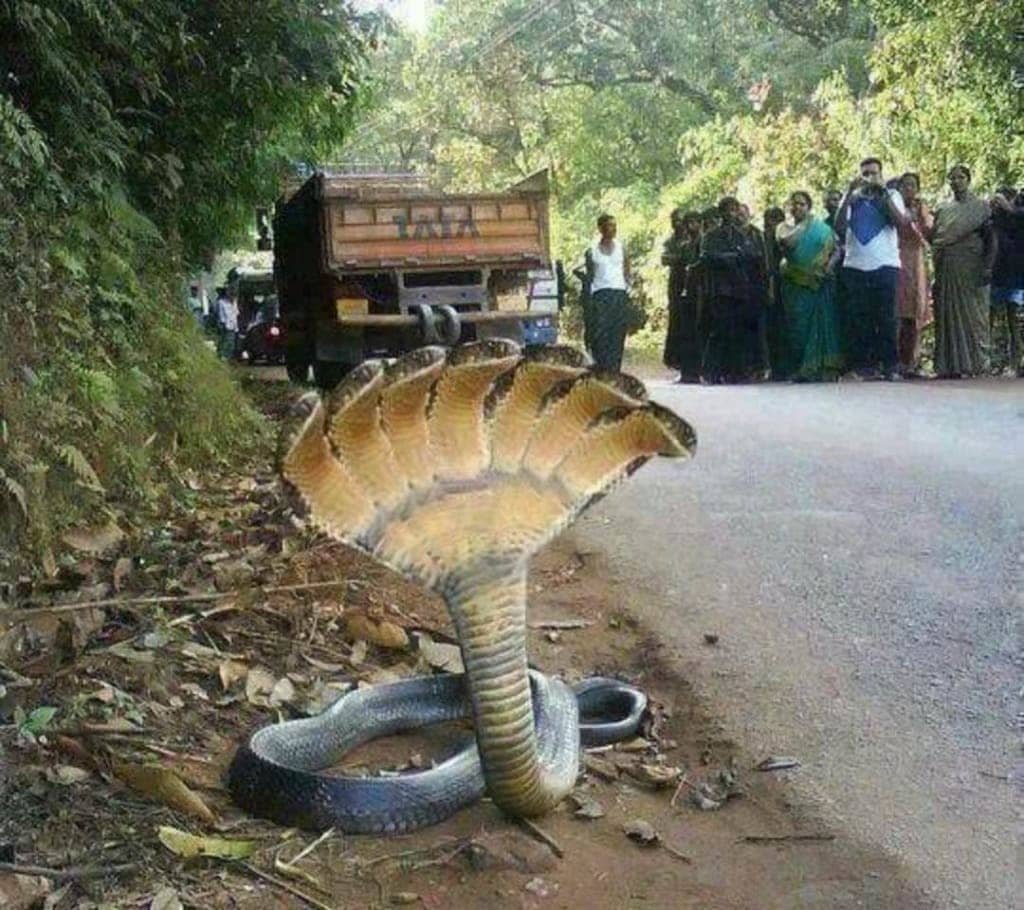
It was also fabricated, and traceably so. The seven-headed version turned out to be a manipulation of an earlier three-headed fake that spread in 2012 as a snake found in India, which was itself a Photoshop edit of a photograph of a king cobra. Polycephaly is real, and we see it occasionally: two heads happens, three is very rare. No living animal with more than three has ever been recorded. What mattered in that era was not just that the image was fake, but that the fakery could be proven and the proof could be shared. Someone in the group would eventually post the Snopes link, and the forward would die there. The image had a history, and that history was public. That is what has changed. An AI-generated image has no earlier version to trace, no original photograph underneath it, and no fact-check page waiting to be found, because it did not exist until somebody typed a sentence. Every fake is now the first of its kind.
At Friends of Snakes Society, our work has always focused on mitigating human-wildlife conflict and conserving India’s reptile biodiversity. Recently, however, we have found ourselves confronting a new and unusual problem: AI-generated snake rescue hoaxes. Across India, authorities have already witnessed how fabricated wildlife imagery can create unnecessary panic. Forest Departments in cities like Lucknow and Mumbai, as well as several locations across Telangana, have dealt with fake “AI leopard” sightings that spread rapidly on social media and messaging platforms. Similar trends are beginning to affect snake rescue networks. Since January 2026, Friends of Snakes Society has been receiving rescue requests on our 24/7 snake rescue helpline (+918374233366) supported by images that were entirely generated using AI tools. Our rescue operations cover Telangana, and that is where most of these reports originate, though we also receive them from callers in neighboring Andhra Pradesh. Until the end of June 2026, we were receiving five to ten such images a month. Since the start of July 2026, as image-generation tools have become easier for anyone to access, our rescue teams have been seeing multiple such images a day.
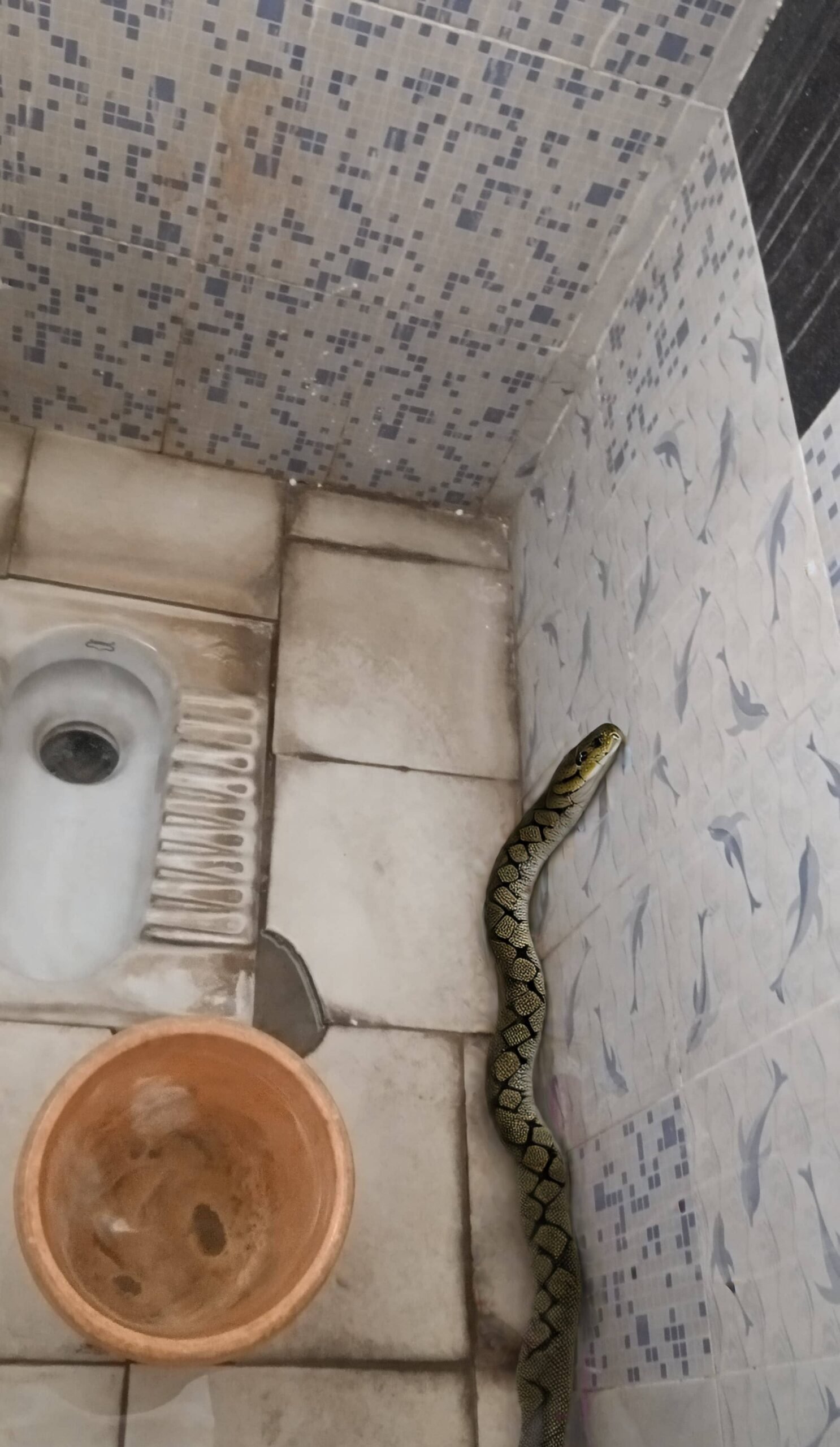
Why would anyone send an AI image of a snake and call for rescue?
We have now handled well over a hundred such reports, and a fairly clear pattern has emerged. Three situations account for almost all of the AI images we receive.
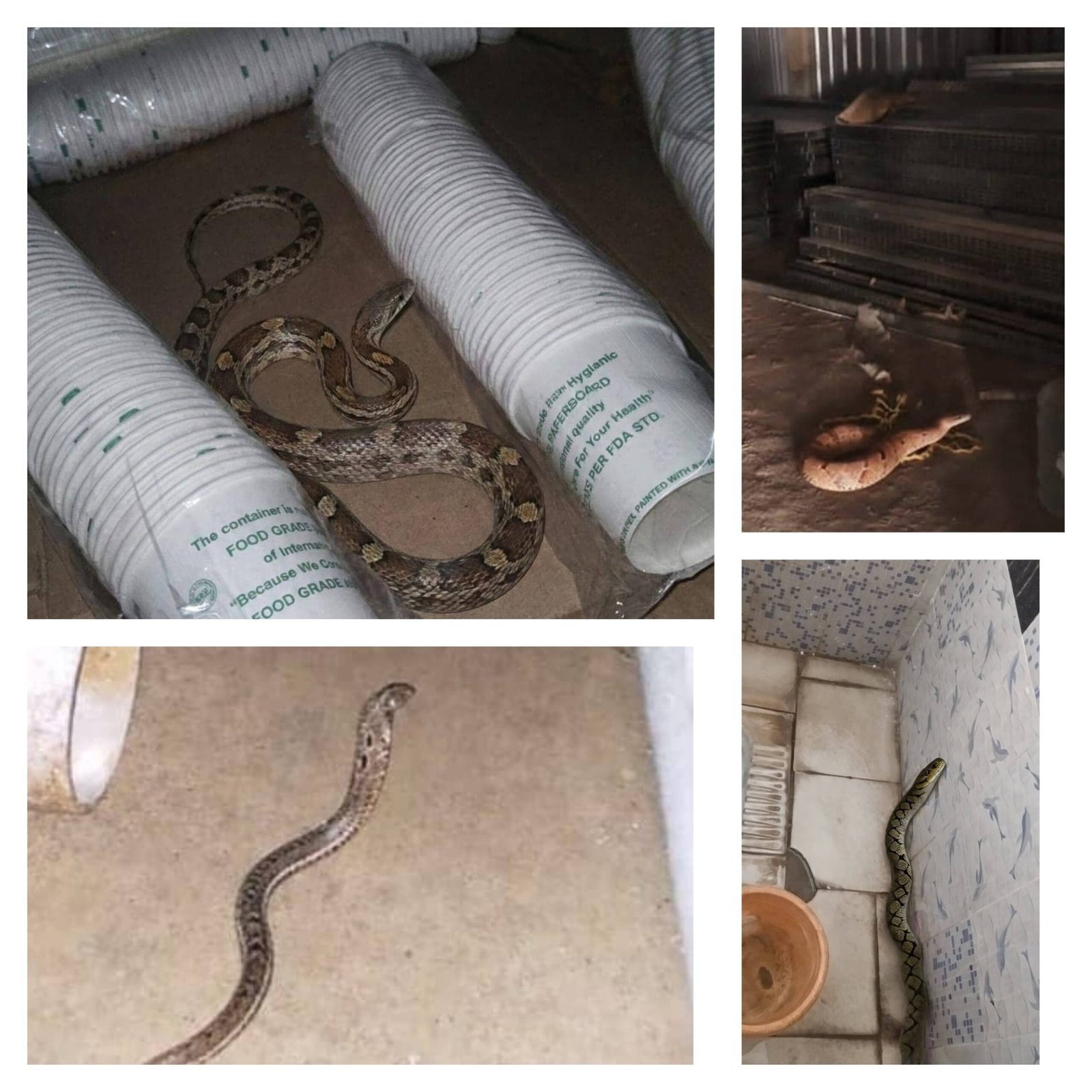
The caller genuinely saw a snake, but it disappeared before they could photograph it. This is by far the most common case. The snake slipped under a cupboard, into a drain, or behind a stack of bricks, and the caller is left with nothing to show the rescue team. Knowing that we may ask for photographs, and worried that a call without one will not be taken seriously, they generate an AI image that roughly resembles what they think they saw and send that instead. It is an act of anxiety rather than deception.
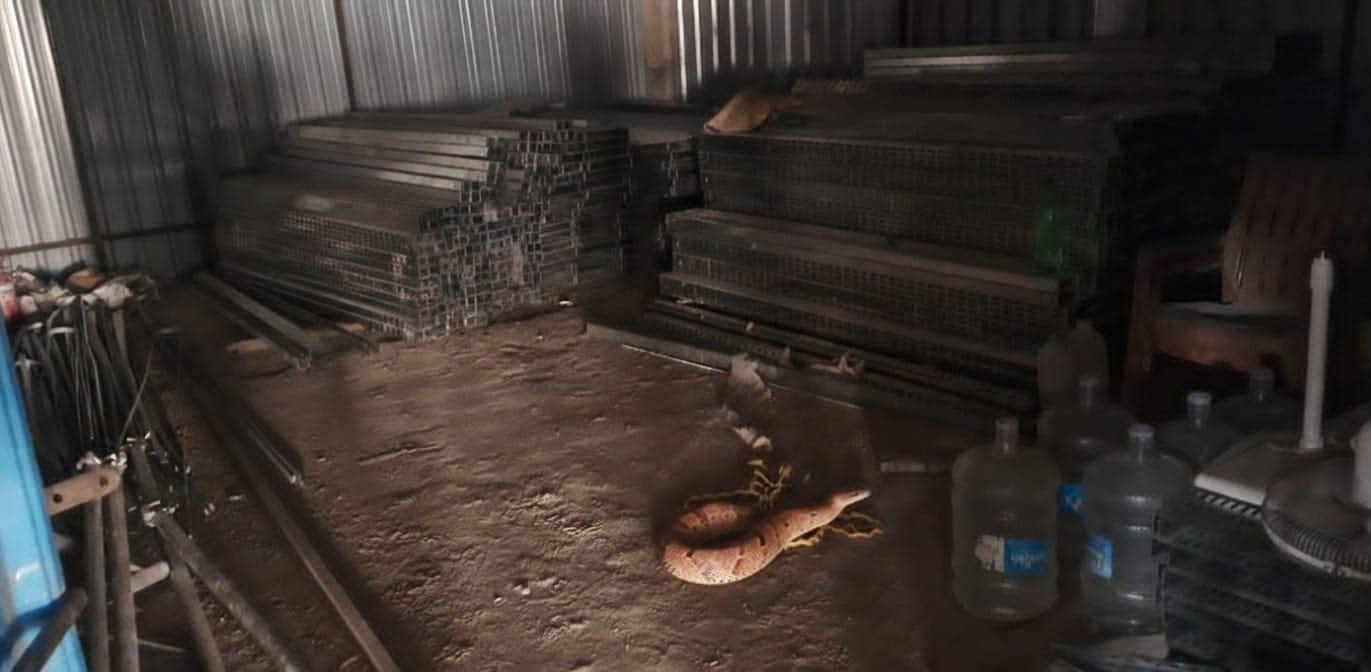
In factory and commercial settings, we occasionally receive AI images sent by staff to their managers, hoping to have work halted for the day or to obtain leave that would otherwise not be approved. A snake on the premises is one of the few things that reliably stops a shift, and an AI image is now enough to trigger one. To be clear, the overwhelming majority of calls we receive from workplaces and shared premises are entirely genuine. We attend thousands of them every year, and such locations are among the places where snakes turn up most often. We record this pattern only because it exists, not because it is common.
The third and least common, but the most wasteful, is the outright prank: a fabricated emergency at an address where nobody answers the phone once our team arrives.
The first of these deserves particular emphasis, because it carries an important operational lesson. A synthetic image does not mean there is no snake. In many of these cases there was a real animal, and the invented photograph was sent out of fear that the truth would not be believed. Our screening exists to identify images, not to dismiss callers. When there is any doubt, our team responds.
The cost of a call that isn’t real
Regardless of the intention, the impact on rescue operations is very real. Every rescue call requires time, fuel, manpower, and coordination. When teams are dispatched to non-existent emergencies, valuable resources are diverted away from genuine rescue situations where both human lives and wildlife may actually be at risk. A fake rescue request can delay response times for a trapped cobra, an injured snake on a roadway, or a frightened family dealing with a real reptile encounter. In wildlife rescue work, unnecessary delays can have serious consequences.
Spotting a synthetic snake
Fortunately, while AI-generated images are becoming increasingly realistic, they still struggle with one important detail: authentic Indian herpetology. Most AI image-generation systems are trained on enormous global datasets that are heavily dominated by Western or generic wildlife imagery. As a result, when these systems attempt to generate images of snakes supposedly found in India, they often create subtle but telling biological inaccuracies. For experienced rescuers and herpetologists, these mistakes are surprisingly easy to spot. One of the most common indicators is what we call the “foreign snake” problem. AI systems frequently generate snakes that resemble species native to Africa or the Americas rather than reptiles commonly found in India. Instead of accurately depicting species such as the Indian Spectacled Cobra or Indian Rat Snake, the images often resemble rattlesnakes, ball pythons, boas, or exotic vipers that do not occur naturally in our ecosystems. To the average person, these differences may not be immediately noticeable.
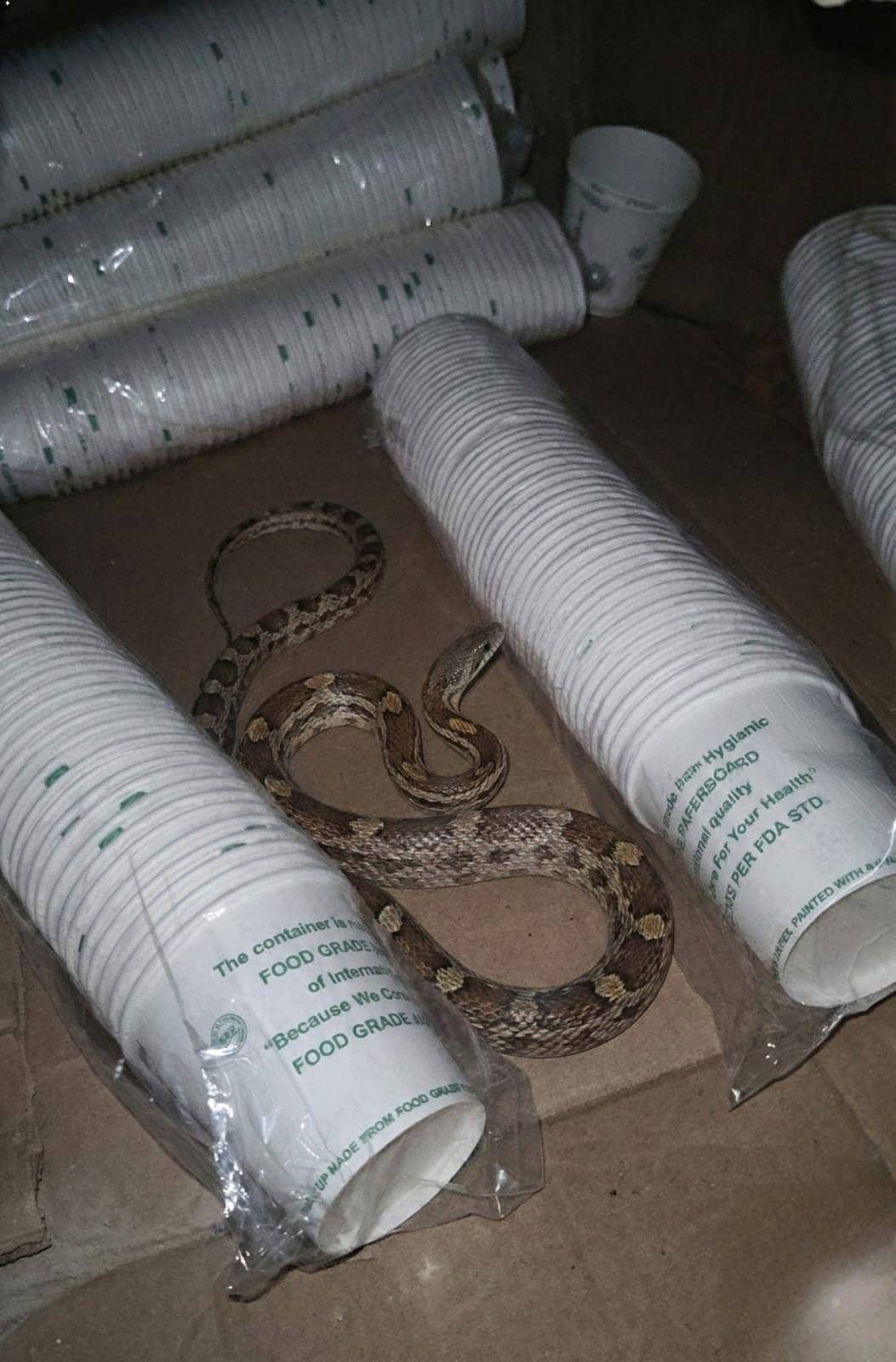
Beyond species inaccuracies, AI-generated snake images often contain biological impossibilities. We frequently observe incorrect scale arrangements, distorted eye structures, unnatural head shapes, and impossible muscle formations. In some images, snakes appear to “float” unnaturally without interacting with gravity or surrounding surfaces. Lighting and shadow inconsistencies are also common. These are small details, but they reveal the gap between synthetic image generation and real-world biology.
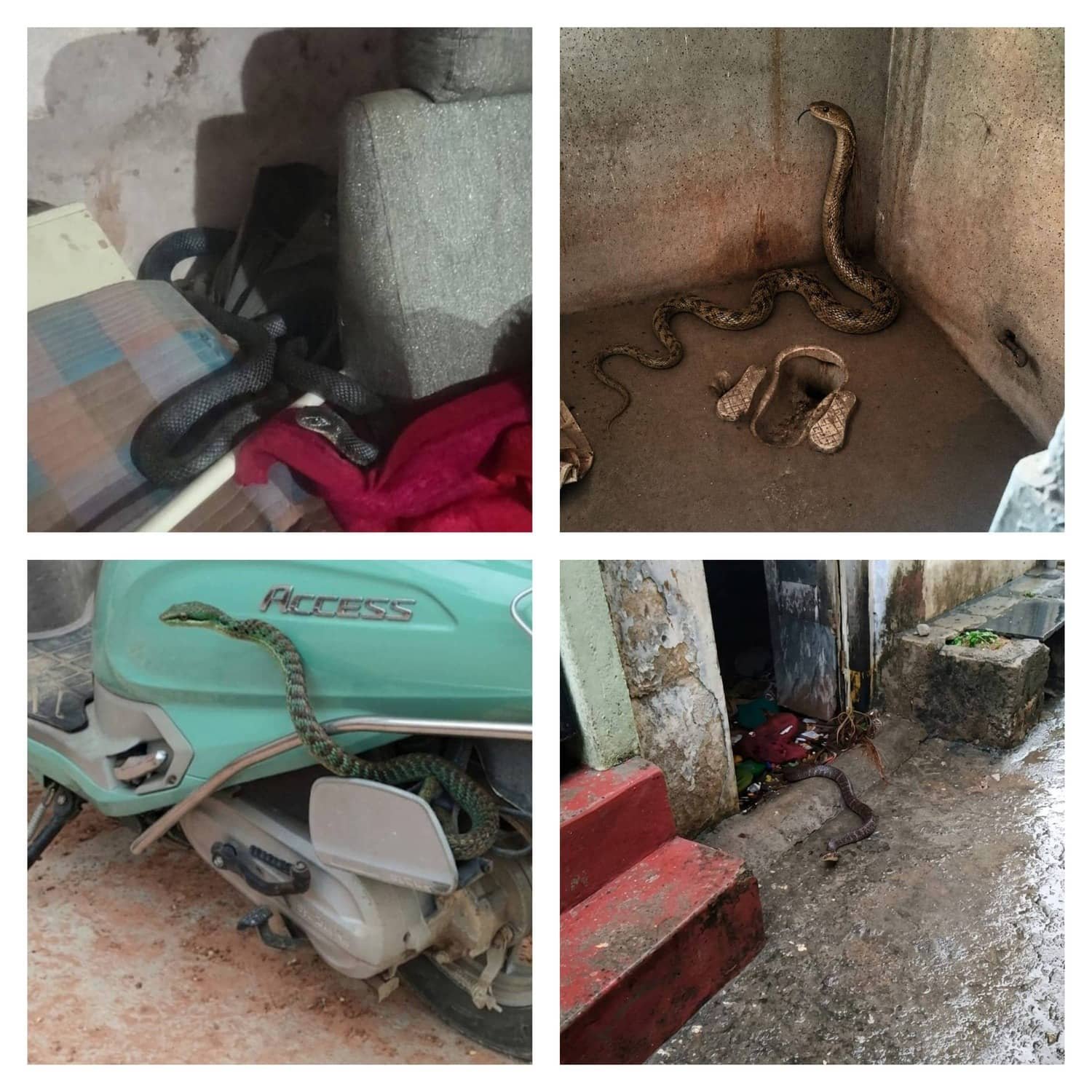
How we verify
Recognizing the growing challenge posed by AI-generated hoaxes, Friends of Snakes Society has adapted its operational protocols. Our rescue verification process now includes an additional layer of digital screening where necessary, so that resources remain available for genuine emergencies. The first step remains expert visual analysis. Experienced volunteers and dispatch coordinators carefully examine submitted images for biological accuracy, species consistency, and environmental realism. Years of field experience allow our team to identify suspicious characteristics that automated systems often fail to understand. When visual inspection alone is inconclusive, we employ AI-assisted image analysis as a secondary verification tool, which can help identify potential AI-generated content by detecting digital artifacts, synthetic textures, watermark traces, and pixel-level irregularities that are often invisible to the human eye. In a sense, we are fighting AI-generated misinformation using a combination of human expertise and advanced technology itself.
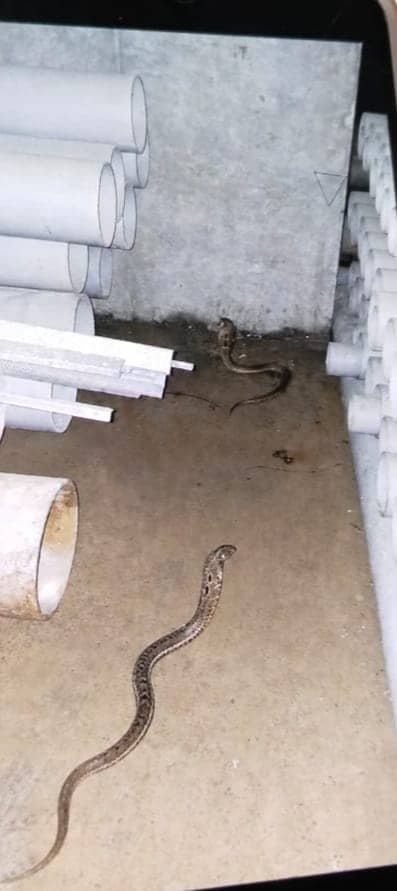
Why this matters
This issue extends beyond simple pranks. Wildlife conservation now depends heavily on digital communication and public participation. Citizens regularly share photographs and videos with rescue teams to identify species, assess threats, and coordinate emergency responses. This system works because it is built on trust. AI-generated wildlife hoaxes threaten that trust by creating confusion, wasting emergency resources, and fueling skepticism around legitimate rescue calls. Over time, such misuse can negatively impact both wildlife conservation efforts and public safety.
At Friends of Snakes Society, we strongly urge the public to use technology responsibly. Artificial Intelligence is a powerful tool with enormous potential for education, research, conservation, and awareness when used ethically. However, creating fake wildlife emergencies, whatever the motivation, has real-world consequences. Snake rescue is not entertainment. It is a critical emergency service that protects both people and animals.
As technology evolves, so must conservation. We are continuously adapting our methods, strengthening our verification systems, and integrating modern tools into our rescue operations. Our commitment is unchanged. We respond quickly, professionally, and responsibly whenever wildlife and people are in conflict. In this new synthetic age, our goal is simple: we will ensure that every rescue we undertake is for a life that truly needs saving.
Updated July 2026