In a world obsessed with “there’s an app for that,” the Friends of Snakes Society (FOS) makes a case that, in a life-or-death crisis, the best user interface is still a human voice.
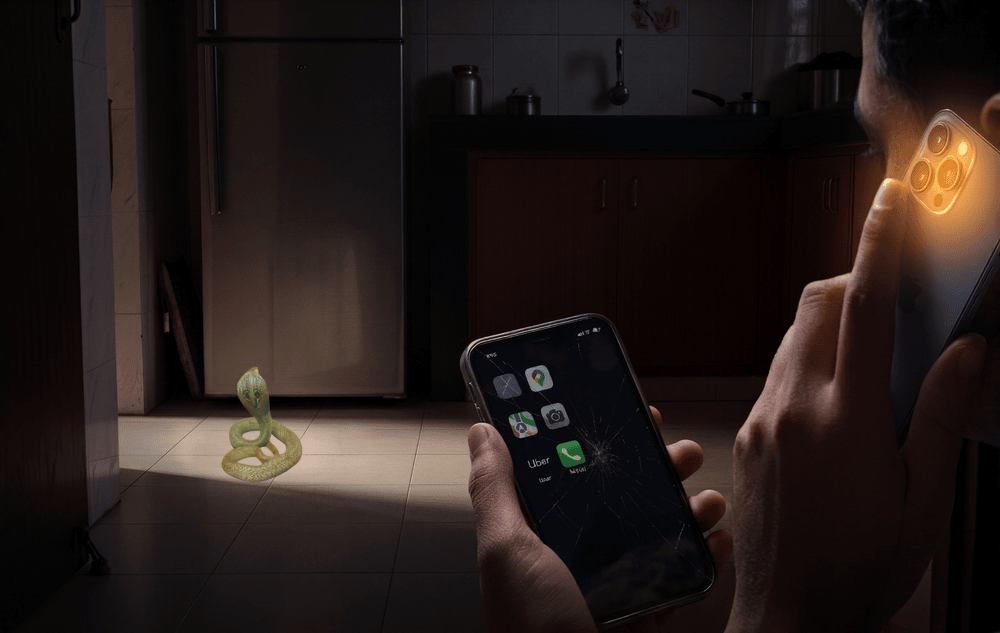
It is 2:00 AM. You walk into your kitchen and freeze. A five-foot cobra is coiled near the fridge, hood spread, hissing. Your heart rate spikes. Your vision narrows. Your hands shake. This is no longer a normal decision-making environment. This is fight-or-flight. Now ask yourself: what is the best user experience in this exact moment?
Option A: Unlock phone → find the app → log in with an OTP → grant location permission → select your location on a map → describe the situation → upload a photo of the snake → wait for a rescuer to accept or get a list of rescuers to contact → hope the rescuer does come.
Option B: Dial a number → hear a human voice say, “Stay calm. We are coming.”
FOS rescued 15,265 snakes across Telangana in 2025, up from 3,389 in 2015, and more than 75,000 over the past decade. That is among the highest documented rescue volumes for a single organisation anywhere. At that scale, FOS has had plenty of experience seeing what works, and what adds unnecessary steps, for both callers and rescuers. And that is precisely why FOS has not built a consumer-facing snake rescue app.
Not because the organisation is anti-technology. The irony runs exactly the other way. Behind the scenes, FOS has built a technology-intensive rescue coordination system: IVR-based call routing, a purpose-built app for its own rescuers, GPS-linked ecological logging, duplicate-deployment detection, and a machine-learning model for snake encounter forecasting. FOS builds software constantly; however, it does not put the complexity in front of the person experiencing the emergency.
Keep the front end human. Keep the complexity invisible. Emergencies are not product demos.
We built an app. Just not for you.
This distinction is worth making concrete, because it is the whole argument in miniature. FOS does have a mobile app. It runs on the phones of trained rescuers and coordinators, not callers. It handles rescue dispatch, rescue logging, species and location capture, and de-duplication when several callers report the same snake. It exists to make the response faster, more accountable, and better documented. That is where an app earns its place: on the side of the system that is trained, prepared, and expecting the work. For the caller, the interface remains a phone number.
Emergencies are not marketplaces
One of the most common mistakes in modern solution-building is assuming every real-world problem behaves like food delivery or cab booking. That mindset has now reached wildlife rescue. Animal welfare organisations are commissioning rescue apps, and many follow the same basic model: an “Uber for snake rescue,” developed around a set of technical requirements rather than around the realities of handling rescue calls.
The pitch deck version always sounds efficient: Citizen uploads a rescue request → nearby rescuers get pinged → someone accepts → rescue is tracked in real time.
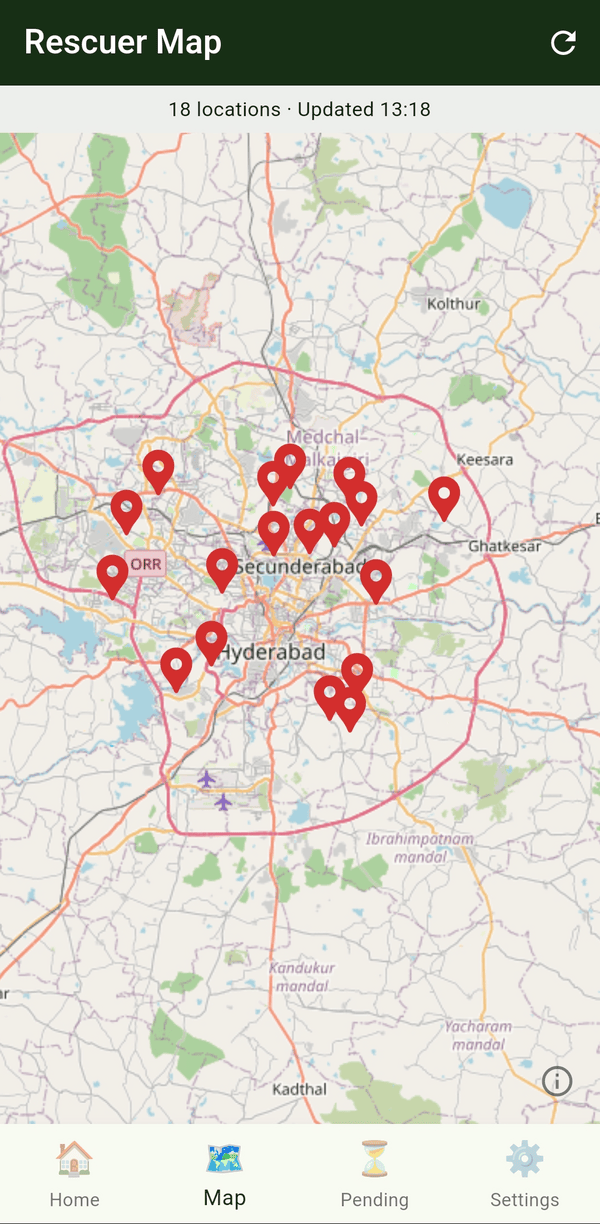
In practice, emergencies do not behave like marketplaces. A terrified family staring at a cobra in their kitchen is not calmly comparing responders on a map. Under acute stress, cognitive load collapses, fine motor control degrades, and people stop processing sequential instructions. The assumption that a frightened person will patiently work through registration, OTP, GPS permissions, photo upload, and push notifications reveals a misunderstanding of how humans actually behave in fear.
There is a further problem with the marketplace comparison. When a cab or delivery app works well, the passenger and the driver never have to speak. The address, the timing and the payment are all settled in software, and eliminating the call is precisely the efficiency being sold. Snake rescue does not work that way. The rescuer will always need to speak to the person reporting the snake regardless: to check whether the snake is still visible, understand the situation, give an arrival time, and pass on precautions if needed. So, the app has not replaced the phone call at all. In such cases, it has added a form in front of the conversation and asked a frightened person to complete it first.
There is a reason why major emergency systems continue to lead with voice: 911 in the United States, 999 in the UK, 112 across Europe and in India. None of them ask you to create an account and upload evidence before help is dispatched. The gold standard in crisis response is not interface sophistication; it is friction removal. This is not an analogy FOS has invented for itself. FOS is the only snake rescue organisation authorised by the Telangana Forest Department and is also part of Telangana’s 112 emergency response system, with snake calls arriving there routed onward to FOS Helpline. The emergency services already classify snake rescue as emergency response and handle it accordingly.
That classification has consequences for how a system gets built. Many rescue apps use a marketplace-style model: they either list nearby rescuers for the user to contact, or broadcast the request to volunteers based on distance and availability. In both models, the system puts the request in front of potential responders, but responsibility for taking it up still rests with an individual volunteer. Neither necessarily hands it to a particular person, and neither necessarily provides a clear escalation path when nobody responds.
Availability status is a weak point in the second model. It is self-reported, it goes stale the moment someone forgets to toggle it, and even when accurate, it only means a volunteer was free when they last opened the app. A directory model can also create problems in both directions. Show a frightened user a list of ten nearby rescuers, and they may not calmly choose one. They may call several of them, because calling several people feels like doing something. The result can be several people converging on one rescue location, or nobody arriving because each person assumes someone else has responded. The underlying problem is that a list does not, by itself, assign responsibility to anyone in particular.
There are also the ordinary failures of consumer software. The OTP does not arrive. The login fails. The request for a rescuer is submitted and nothing happens. These are manageable inconveniences in many consumer applications, but they become much more consequential when someone is waiting for help. And there is a quieter signal in public reviews, which is what people do next. They give up on the app and find a number to call. When people routinely move from an emergency consumer rescue app to the phone call to get a response, it is worth asking whether the app was even effective in the first place.
Emergencies need dispatch, not discovery
FOS operates on cluster-based routing with human escalation. The helpline’s IVR is organised into area clusters, each with its own roster of trained members. A caller selects their area and the call routes to the nearest available member in that cluster. The member who picks up is the assigned responder, rather than a volunteer deciding whether to take up a request from a list.
When nobody in a cluster is available, the call does not simply fail. It falls through to a coordinator, who handles it directly and, where the situation warrants, sends a member from a neighbouring cluster. This creates a defined escalation path rather than leaving the caller to keep looking for another responder. In a broadcast model, by contrast, a request that nobody accepts may have no clear path to reassignment at all.
In the FOS model, every call terminates in a human being who is responsible for it. The system produces exactly one responder and knows who it is. The caller does not have to keep searching for someone who will take responsibility for the request. The difference is therefore not simply that one system uses a phone and the other uses an app. It is that the FOS system assigns responsibility and provides escalation, while a marketplace-style model leaves the request for an individual volunteer to take up.
When conversations escalate
Not every escalation is about rescuer availability. Some are about what gets said on the call. In peak season, when every rescuer in a cluster is already out on a call, a caller may be waiting thirty minutes with a cobra in the house. They are frightened, and frightened people are not always polite. Sometimes something gets said, and the rescuer declines to respond any further. Now there are two problems. The snake is still at the rescue site, and the two people meant to solve it together are no longer speaking. This is where a coordinator’s role becomes vital. The coordinator may need to calm a caller who does not realise how they sounded, hear out a volunteer who feels insulted, and decide whether the original rescuer should continue or someone else should be sent. If a coordinator cannot settle it, it goes further up, to people answerable for both the rescuer and the rescue.
This kind of human escalation is difficult to represent in a simple request-and-accept workflow offered by a consumer app. A rescuer declining a request is not necessarily the end of the matter; there may be a reason to understand, resolve, and act on.
The invisible work: triage
There is a step in the FOS workflow that is difficult to replicate through a consumer app: deciding which calls actually require a rescuer to travel to the location.
On any given day, some calls concern a snake that was seen an hour ago and is no longer visible; others are about a shed skin found behind a cupboard. Some descriptions clearly turn out not to involve a snake at all, while others involve a snake that does not need to be moved. There are also callers who need an assessment, reassurance, or instructions rather than a physical rescue.
At FOS, this assessment happens when the caller first reaches the helpline. Calls are handled by a trained rescuer, not a call-centre operator reading a script. They can ask the handful of questions that actually resolve the situation: where exactly, how long ago, what did it look like, and is it still there. In some cases, those questions settle the matter on the call itself, without anyone having to travel to the location. This is an important part of the rescue operation because it prevents every call from becoming a deployment. The FOS helpline model first determines what is actually needed, and only then is a rescuer sent to the location when necessary.
An app-based request usually begins with a form rather than a conversation. A form collects the information it has been designed to collect, but it cannot respond to an unexpected answer or ask the next question that changes the assessment. A user may therefore submit a request for a snake that is no longer there, for example, in exactly the same way as a user reporting a snake that is still inside the house. The request then reaches the individual rescuer, who has to make the assessment that FOS makes at the beginning of the helpline call. The rescuer calls the person back, asks the questions the form could not ask, and works out whether travelling to the location is actually necessary. That rescuer can answer only for themselves, and nobody in the system can tell the person reporting the snake whether another rescuer will respond.
For the user, this means that the assessment has not been eliminated by the app; it has simply been postponed until after the request has reached a rescuer. The user may have downloaded the app, completed a registration process, described the situation and submitted the request, only to have the same situation assessed again over the phone.
At higher volumes, this becomes an operational problem. Rescuers have to spend time reviewing requests that could have been resolved before dispatch, while genuine rescue requests are competing for attention in the same queue. If the queue becomes dominated by requests that do not require deployment, responders may become less likely to monitor it consistently, which can eventually affect the response to genuine emergencies as well. The distinction is therefore not between a system that uses technology and one that does not. It is between a system that filters and assigns a request before dispatch, and one that asks individual rescuers to perform that assessment after the request has already reached them.
Human triage is therefore not an additional layer of bureaucracy. It is one of the mechanisms that allows a high-volume rescue operation to use its responders where they are actually needed.
A helpline does not check your phone’s specifications
There is another reality that app-first solutions tend to ignore. Snakebite risk falls hardest on the people least served by app ecosystems: farmers, migrant labourers, low-income and peri-urban settlements, households on the expanding edge of a city.
Many will not have a high-end smartphone, reliable data, spare storage for a single-purpose app, or the digital fluency to navigate an unfamiliar interface under stress. Some will be calling on a neighbour’s phone. A helpline removes all of those requirements. Anyone with access to a mobile phone can call. That is not outdated thinking; it is a form of inclusive emergency design.
What an app still cannot do: reassure
In most snake rescue situations, responders are not only managing wildlife. They are managing fear. A frightened household often needs psychological stabilisation long before a rescuer physically arrives. A calm human voice saying “close the room, keep everyone at a distance, don’t try to kill it, we’re on the way” prevents exactly the panic-driven actions that cause most bites, and most of the unnecessary killing of snakes.
That thirty-second conversation is often the single highest-value intervention in the entire rescue. No push notification delivers it. The reassurance is not separate from the rescue; it is part of the response.
So where does the technology actually live?
Underneath a phone call that feels almost primitively simple:
- IVR routing organised by area cluster, running around the clock every day of the year
- Coordinator escalation for calls no cluster can absorb, including cross-cluster reassignment
- A rescuer-side mobile app for navigation, field data capture, and completion status, so a call that was taken is a call that was accounted for
- Duplicate-deployment detection, which recognises when several callers are reporting the same snake and stands down every responder but one
- Structured rescue logging that predates the app by a decade, captured over SMS long before there was an app to do it and now GPS-linked, which has produced one of the largest urban snake-encounter datasets anywhere and the basis of a study covering 55,467 rescues between 2013 and 2022
- Machine-learning research, currently under way, on forecasting when snake activity is likely to peak, aimed at helping FOS anticipate demand and warn the public during high-activity periods
The duplicate-detection line is worth dwelling on, because it is a problem the caller has no way to see. One cobra in an apartment block does not produce one call. It produces a call from the ground-floor flat, another from the neighbour who saw it first, and a third from someone in the next building who heard shouting. Each of those reaches a different member, and each of those members commits. The FOS system processes the overlap within seconds of a duplicate rescuer request using automated Rescue Coordination bots and stands the other rescuers down before anyone has set out. None of that is visible to the caller. That is precisely how technology should work in an emergency: it should absorb complexity in the background rather than asking the person in distress to manage it.
Built by the people who answer the calls
There is one more reason the FOS stack looks the way it does, and it is probably the most important one. None of it began as a software specification developed separately from the rescue operation. It was built from first principles by the same people who were rescuers first, and who had repeatedly watched several volunteers set out for the same rescue location without knowing about each other. This duplicate-deployment bot now acts like the Automatic Train Protection system used by Indian Railways, but for snake rescue coordination and implemented purely in software.
The IVR clusters are a smaller example of the same approach. Instead of asking callers to identify an administrative zone or enter an exact location, FOS groups neighbouring localities into clusters based on how people actually describe where they live. When a caller reaches the IVR, they hear familiar locality names and simply select the area they recognise. This makes the choice easier, especially when someone is calling in a stressful situation. The clusters are also not fixed forever. FOS keeps refining them based on experience, where callers hesitate, which areas they select incorrectly, and how people describe their locations, so that choosing the right area becomes as intuitive as possible.
The same applies to what goes wrong. Rescue software can also fail in ways that are invisible from the outside but immediately apparent to people working in the field: a mandatory photo field for a snake that has gone under a sofa; a location pin that sends the rescuer to the wrong lane; or a status flow with no state for “arrived, snake gone, calmed everyone down, left.” These are not necessarily software bugs. They are examples of what can happen when a workflow is designed without sufficient experience of how it is actually used in the field.
Field-built systems are shaped by how the work actually happens rather than by how it was imagined at the specification stage. They also tend to hold up on the high-volume days, which is the only test that really counts. That experience also determines what gets built next. A system built for one job tends to stay good at it. A system that keeps absorbing adjacent jobs tends to stop being good at the first one. The instinct in platform-led programmes is often expansion: another user type, another module, another category of problem folded in behind the same login. Each addition can look like progress, but adding functionality does not necessarily improve the original workflow. Sometimes it simply makes the system more complex for the people who need to use it.
The difference between a platform and an operation shows up right here. FOS trained rescuers first and added software to a system that already worked. The opposite order, where the platform is built and responders are recruited onto it afterwards, may appear effective while leaving the underlying response operation still to be built.
“But apps are good for education”
The argument that apps are good for education is weaker than it sounds. First aid, do’s and don’ts, species identification, myth-busting: none of it requires a dedicated rescue app. It works better on a website, a WhatsApp-shareable card, a multilingual awareness page, a poster, or a school session. And for people who genuinely prefer a digital-first experience, all of that can live as an optional web experience, with no install, no account, no storage cost, and no update cycle. Educational content and emergency response do not need to be fused into a single app ecosystem. Combining them may make an app appear more useful, but it does not necessarily make the emergency response itself better.
The wider lesson
The future of snake rescue is undoubtedly technological. Urbanisation is driving human-snake encounters upward across tropical cities, and rescue systems will keep evolving through better coordination tools, predictive analytics, and ecological intelligence.
None of this is a vow of abstinence. FOS is not loyal to the mobile phone. It is loyal to whatever gets a trained rescuer to a frightened person fastest, and today that is a voice call. If a channel arrives tomorrow that beats it, demonstrated in the field rather than in a launch presentation, FOS will build on it without sentiment. The organisation has never been short of appetite for new tools. It has only insisted that they earn their place.
That includes voice itself. A synthetic voice that picks up on the first ring at 2:00 AM, speaks the caller’s own language and knows to say “close the room and keep your distance” could one day carry part of this load, particularly during the surges when every member in a cluster is already on another line. It is worth building towards in future without the need for cluster-based selection, where AI could check on the caller’s location directly. However, this system would still be an extension of the voice channel, not a replacement for it, and the hardest part of the job would remain where it has always been: a trained person deciding what is actually happening and going there.
None of this is specific to snake rescue. Any wildlife rescue operation that takes emergency calls faces the same questions: where assessment happens, who owns a request that nobody accepts, and which side of the system the software should sit on. What FOS runs is an operational framework, built from decades of rescue data, field experience, and caller and rescuer interactions, and we have presented it here for anyone interested in building something similar.
The test for any new technology is simple: does it reduce the burden on a person in a moment of fear, or does it move that burden onto them? The lesson runs deeper than snakes. Good technology is not about forcing an app into every problem. Good technology understands human behaviour. And in a moment of fear, the best interface humanity has ever built is still another human being saying: “Stay calm. Help is on the way.”
Friends of Snakes Society operates a 24/7 snake rescue helpline (+918374233366) across Telangana. If you encounter a snake, do not attempt to handle or kill it. Move everyone away, keep the room closed if it is indoors, and call the helpline.